Seasons & Weather
When Should You Visit the Maldives? Choose the Experience…
The best time to visit the Maldives depends on more than sunshine. Explore how weather, marine life, privacy, seasonality and priorities shape the ideal travel window—and why months reveal different versions of these islands.
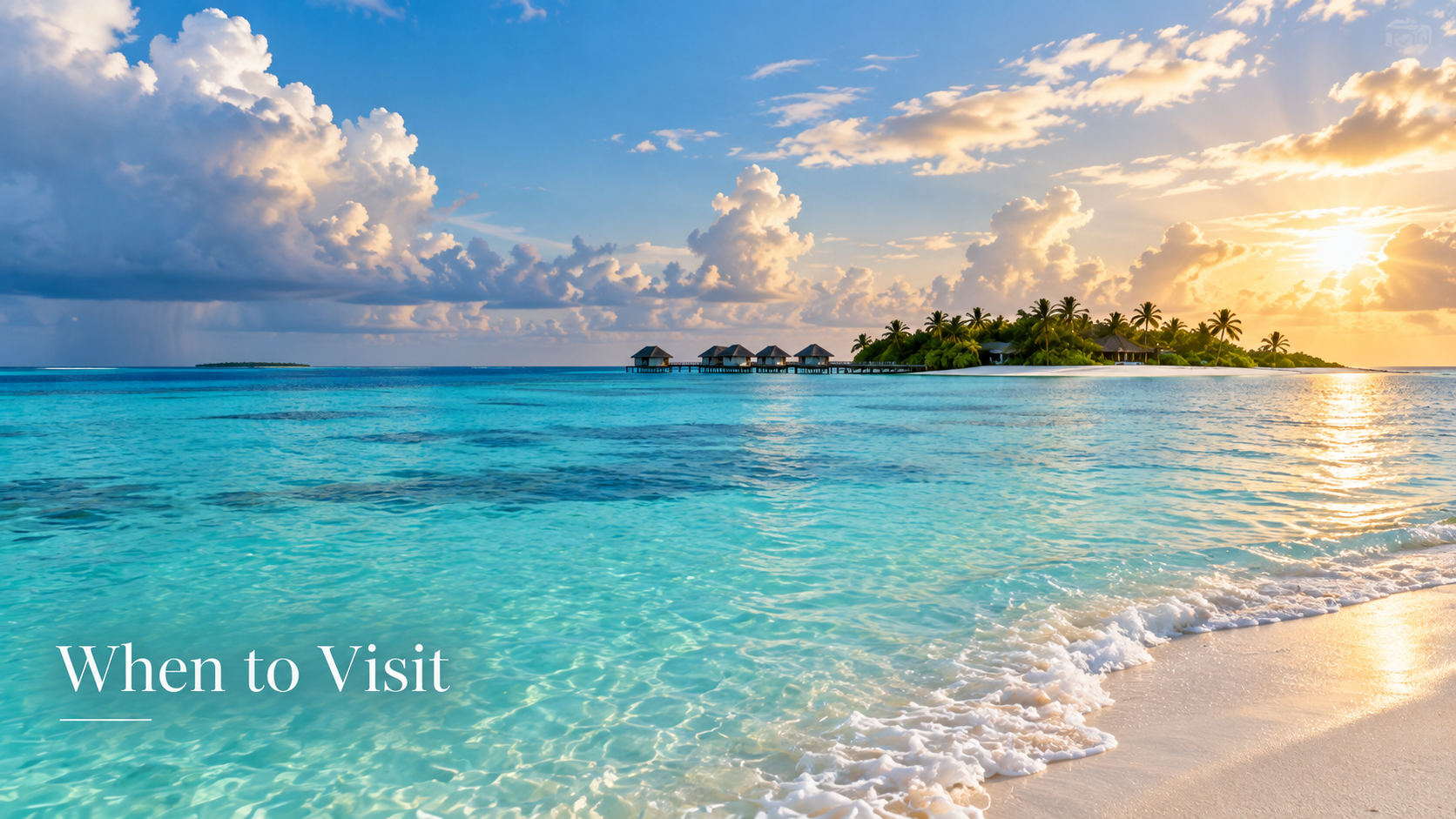
There is a particular kind of Maldives day that lives in travel brochures: a flat blue lagoon, a cloudless sky, sunlight turning the shallows almost white. It is real. But it is only one version of the country. Come at another time and the sky may be more restless. Clouds build over the ocean, rain arrives hard and briefly, and the lagoon changes from turquoise to steel-blue. Somewhere nearby, plankton-rich water may be drawing manta rays towards a feeding ground. So the best time to visit the Maldives is not simply the month with the least rain. It depends on what you hope to find when you arrive. If you want classic sunshine The Maldives has two broad monsoon periods. The drier northeast monsoon generally falls around December to April, while the southwest monsoon brings wetter conditions for much of May to November. For travellers imagining long beach days, calm-looking horizons and dinner outside beneath a clear sky, the drier months are naturally attractive. They are also popular, particularly around Christmas, New Year and the European winter. But “dry season” is not a guarantee written into the atmosphere. Tropical weather does not read hotel reservations. A February afternoon can still bring rain, just as an August day can be brilliantly sunny. Think in probabilities, not promises. If the ocean is the reason you came Weather looks different when viewed through a snorkel mask. The wetter southwest monsoon brings changes in currents and plankton, and those changes can create extraordinary wildlife opportunities. Hanifaru Bay in Baa Atoll is especially famous for manta ray gatherings during this part of the year. Visit Maldives identifies May to November as the broader period for these encounters, with particularly strong activity around the middle of that window. That creates an intriguing trade-off. The month with the most dependable postcard weather may not be the month that gives you the marine encounter you remember for the rest of your life. If mantas, whale sharks or diving are central to the trip, choose the atoll and season together rather than treating “the Maldives” as one uniform ocean. If privacy matters more than perfect skies There is another luxury that rarely appears in weather charts: space. Outside the most sought-after holiday periods, some travellers may find a quieter rhythm. Resorts can feel less hurried. Restaurants may be easier to book. The island can seem to belong to fewer people. For someone who can stay seven or ten nights instead of racing through four, a passing shower may matter surprisingly little. Rain becomes a reason for a long lunch, a spa treatment, a nap, or watching the weather move across the sea from a covered deck. Maldives tourism itself moves through noticeable seasonal rhythms, something explored in our analysis of changing tourism demand through the year . Pick the memory first Instead of asking, “What is the best month?”, try asking a more interesting question. Do you want the clearest chance of long sunny days? Do you want mantas? Diving? Surf? Fewer people? A family holiday tied to school breaks? A honeymoon where weather certainty matters more than wildlife? Once that answer is clear, the calendar becomes much easier to read. The Maldives changes subtly through the year. The islands remain in the same place, but the sky, currents, animals and atmosphere do not. Sometimes choosing when to come is really choosing which Maldives you want to meet.