Accommodation & Resorts
Should You Split Your Maldives Trip Between a Local Island…
A split stay can combine everyday island life with resort ease, but the transfer plan matters as much as the accommodation.
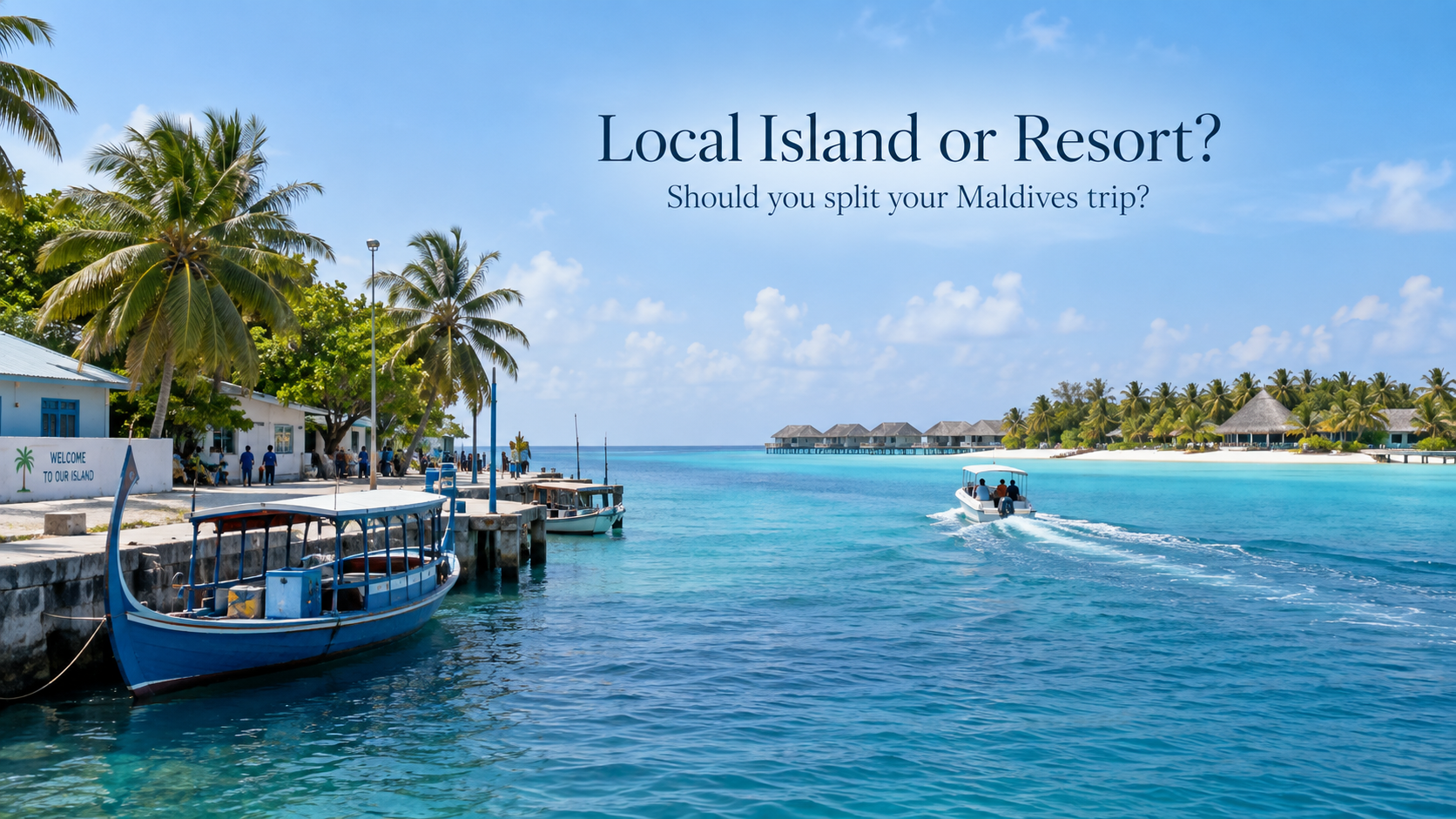
Yes— a local-island-and-resort split can be one of the most rewarding ways to experience the Maldives , particularly if you want more than a private-island holiday. The two stays offer genuinely different experiences: a local island brings you closer to Maldivian communities, cafés and everyday rhythms, while a resort gives you the privacy, facilities and self-contained ease many travellers associate with the Maldives. The combination works best when you have enough time to enjoy both without rushing. Before booking either stay, however, confirm exactly how you will travel between them. A nearby island does not automatically mean an easy direct transfer. What changes when you move from a local island to a resort? A local island is a living Maldivian community rather than a tourism-only island. You may walk past homes, schools, mosques, shops, cafés, fishing harbours and children heading to football in the late afternoon. Guesthouses can arrange activities such as snorkelling, diving, fishing and sandbank trips, but the wider experience is connected to ordinary island life. Local customs also matter. Visit Maldives advises visitors to dress modestly in public areas of inhabited islands. Many tourism islands have designated bikini beaches where normal swimwear is appropriate. Alcohol is not available on local islands, and food and drinks served within the community follow local Islamic norms. A resort stay is different. Your accommodation, restaurants, beaches, activities and services are concentrated within the resort environment. That usually makes the holiday simpler, but it also means you see less of everyday Maldivian life unless you deliberately arrange a local-island visit. Neither experience is more “authentic” for every traveller. They simply reveal different parts of the Maldives. Solve the transfer before you book the rooms This is the part most likely to complicate an otherwise good split stay. Local-island transport can involve public ferries, scheduled speedboats or domestic flights, depending on the island. Visit Maldives specifically notes that public ferry services do not reach every Maldivian island and recommends arranging transport through your guesthouse when travelling farther from Malé. The national RTL network is expanding, but routes and schedules remain destination-specific. Resort transfers work differently. If your resort uses a seaplane, for example, Trans Maldivian Airways states that resort-transfer reservations are made through its partner resorts rather than independently by the traveller. That means you should never assume you can simply take your local-island speedboat directly to the resort , even when the two islands look close on a map. A direct boat may be possible for a particular combination, but it is not universal. In other cases you may need to travel via Velana International Airport, a domestic airport or another agreed transfer point. Ask both properties to confirm the entire route before paying non-refundable rates: where you will be collected, who operates each leg, whether the connection is direct, and how much time to allow. Maldives Immigration also requires tourists to hold a complete travel itinerary, including confirmed return travel and prepaid accommodation at a registered facility, so keep confirmation for every part of a split stay. Which stay should come first? For many first-time visitors, local island first and resort second is the more natural sequence . You begin with exploration: walking around the community, trying local food, taking excursions and understanding something of the country beyond the resort experience. You then move into a quieter resort stay where fewer daily decisions are required. Finishing at the resort can also feel more restful after an active first few days. But the order should never be chosen for atmosphere alone. If one property has a difficult transfer, your international arrival or departure time may make the opposite sequence much more sensible. Routing should win over aesthetics. If you are still comparing how different Maldives stays fit together, the Beyond Sunset Maldives Field Notes and Maldives journey ideas provide useful context for thinking about islands, transfers and the overall rhythm of the trip. When is one island better than two? A split stay is less convincing when the holiday is short. Every hotel change involves packing, checking out, waiting for transport, travelling and settling into another room. If relaxation is your main purpose, that interruption may cost more—in time and energy—than the second experience adds. Staying in one place can also be better when you have already found an island that closely matches your priorities for reef access, beach, food, activities and atmosphere. But if you have enough time and genuinely want to experience both the inhabited Maldives and the resort Maldives , the contrast can make the journey considerably richer. Choose the two stays together rather than separately. If you want Beyond Sunset to assess a local island, resort and transfer sequence as one journey, share your dates, flight times, trip length, budget and the islands you are considering through the private journey brief . Beyond Sunset reviews each brief personally and can help shape the routing around how you actually want to travel.