Food & Dining
Half Board or All-Inclusive in the Maldives: Which Meal…
The right Maldives meal plan depends less on appetite than on drinks, dining flexibility, trip length and what your resort actually includes.
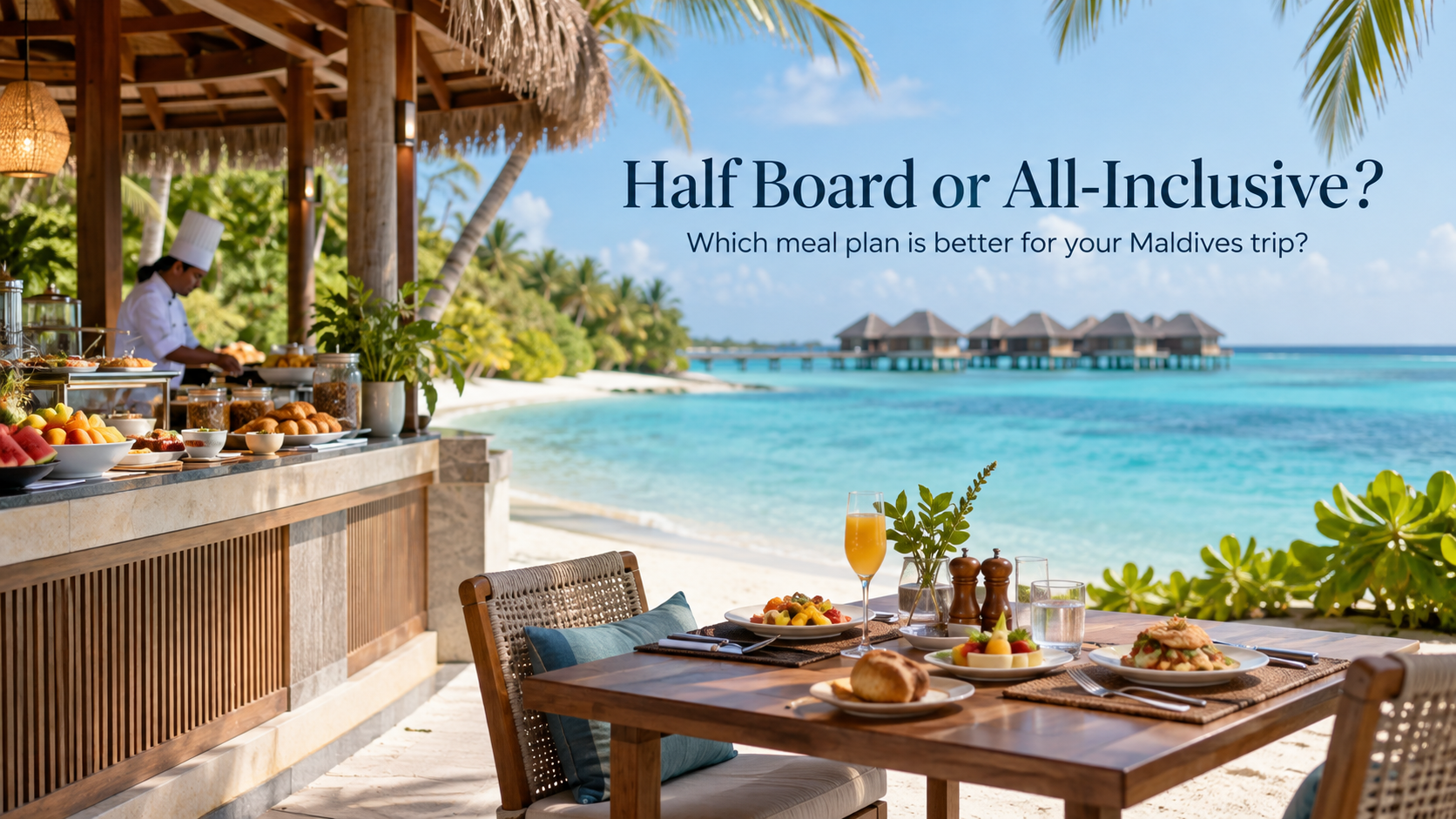
For many couples who eat a substantial breakfast, skip lunch and have only a few drinks, half board can be the better-value choice . If you expect lunch, regular drinks, snacks and several days spent almost entirely at the resort, all-inclusive can make spending more predictable and may offer better overall value . The important part is not the label. Maldives resorts define half board and all-inclusive differently, so compare the actual inclusions before comparing the price. When does half board make more sense? Half board generally centres on breakfast and dinner , but even that simple description can hide important differences. At Baros Maldives, for example, the current Half Board plan includes breakfast and dinner at Lime Restaurant, while dining at two other restaurants instead attracts a food discount. Its separate Half Board Dine Around plan expands the restaurant choice and adds other benefits. That distinction matters. Two resorts can both advertise “half board” while offering very different dining flexibility. Half board is worth considering if you: normally eat a late breakfast and do not need a full lunch; drink little alcohol; prefer paying separately for the occasional cocktail or speciality dinner; expect to spend part of the day on excursions; want freedom to choose extras rather than paying for a large package in advance. It can also suit travellers who care strongly about food quality and would rather spend selectively at particular restaurants than maximise the number of included meals. Before booking, check whether dinner is buffet or à la carte, which restaurants participate, whether drinks are included, and what happens when you choose a speciality venue. When is all-inclusive genuinely useful? The traditional Maldives resort model makes all-inclusive unusually relevant. Many resorts occupy their own island, so once you arrive, most of your dining and drinking will take place within the property. Visit Maldives continues to describe this as the country's distinctive “one island, one resort” concept. For travellers who expect three meals a day, several drinks, snacks and considerable resort time, all-inclusive can remove repeated decisions about spending. But all-inclusive is not a standard product . Sun Siyam Iru Fushi's 2026 Premium All Inclusive Dine Around, for example, provides access across 15 dining venues alongside a substantial premium beverage selection and other privileges. At other properties, an all-inclusive plan may centre on a main buffet restaurant, selected drinks and only limited access to speciality venues. Current traveller discussions reflect exactly this uncertainty: visitors repeatedly ask whether upgrading from half board is worthwhile when they are light drinkers, whether speciality restaurants are included, and how much they would realistically spend without the upgrade. So do not compare half board versus all-inclusive in general . Compare the two plans at the specific resort you are considering. What should you check before paying for an upgrade? Start with the price difference for your whole stay, then ask what behaviour would be required for the upgrade to make sense. Check: Meals: Is lunch included? Buffet only, or à la carte too? Restaurants: Can you dine around freely, or are some venues excluded or discounted rather than included? Drinks: Are cocktails, wine, fresh juices, coffee and bottled water included? Are premium brands excluded? Minibar: Included, partially included or charged separately? Experiences: Does the plan include snorkelling trips, non-motorised watersports, spa credits or excursions? Restrictions: Are reservations required? Are there limits on dishes, venues or frequency? The final point is especially important. A long inclusion list may look generous, but it has little value if you will not use most of it. Likewise, do not assume half board is automatically the economical option. Buying lunch, drinks and snacks separately every day for a week can change the comparison significantly. The best approach is to think about an ordinary resort day: what will you actually eat, drink and do? Then price the package around that behaviour. Beyond Sunset's Maldives Field Notes and Maldives journey ideas can help place meal-plan choice alongside the wider decisions that shape a stay—resort style, island size, transfers, reef access and the pace of the trip. Planning Your Maldives Trip Meal plans are most useful when compared as part of the total resort experience , not as a separate upgrade. Beyond Sunset offers travel consultation and bespoke journey design for travellers who want help evaluating those trade-offs. If you are comparing resorts, share your travel dates, number of guests, approximate budget, drinking preferences, dining priorities and resorts already under consideration . Those details are enough to begin assessing which plan is likely to suit the way you will actually travel. Start your private Maldives journey brief